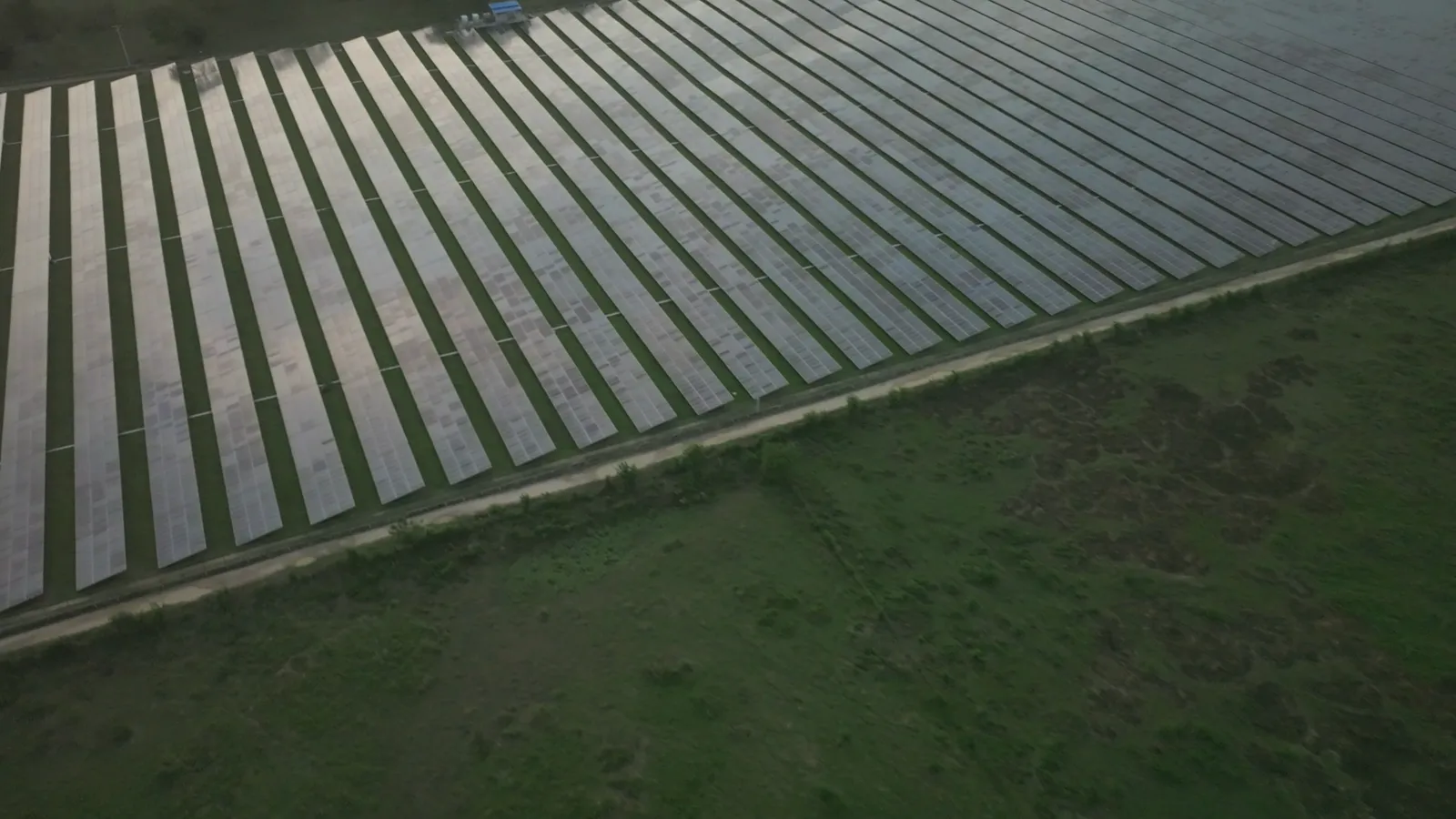
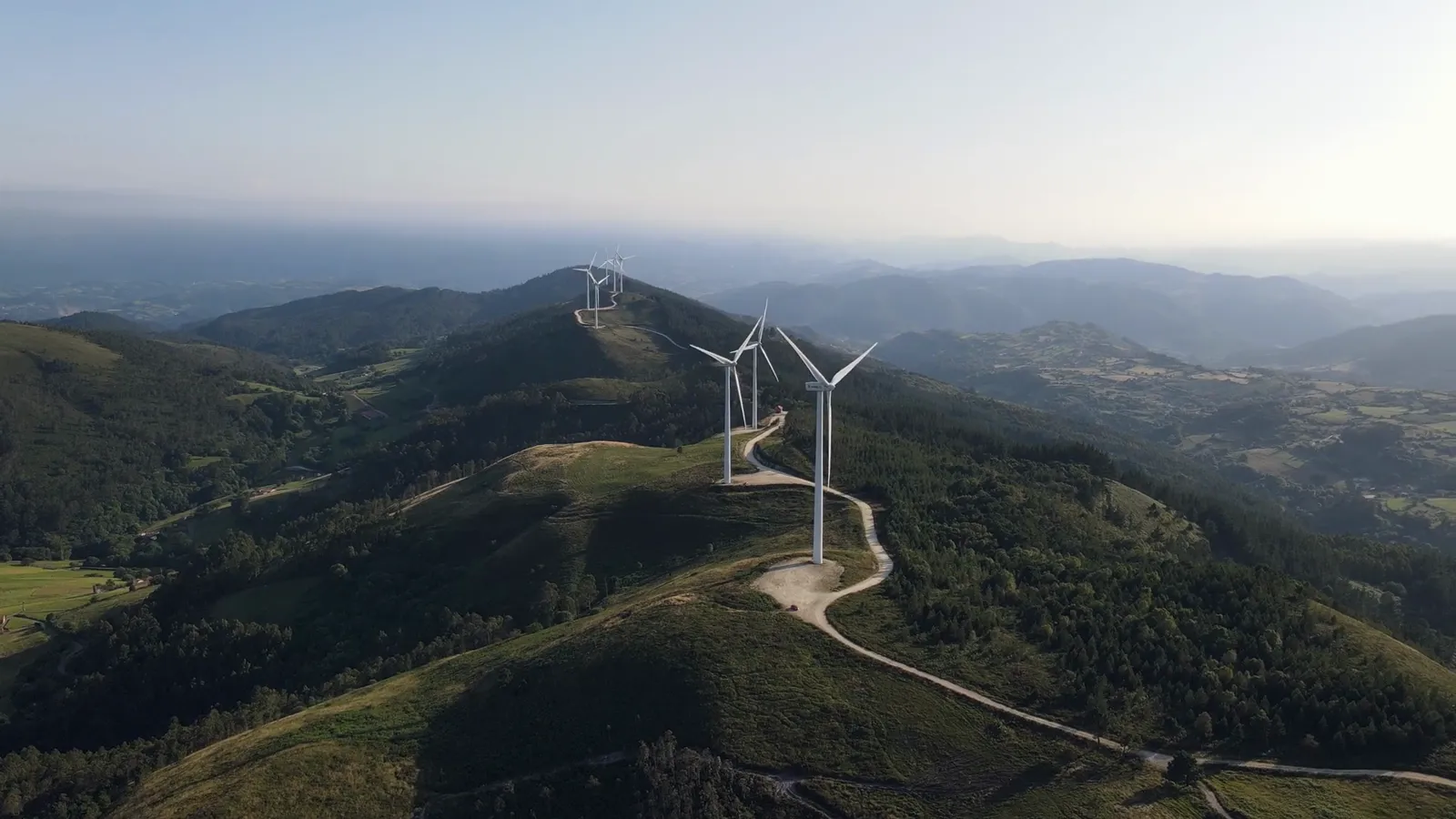
We combine supervisory control and data acquisition (SCADA), historian measurements, equipment records and maintenance history. Our models identify persistent deviations; our workflows organize the evidence your team needs to assess them.
ANALYSIS AND WORKFLOW AUTOMATION
See the analysis.Follow the decisions.
Explore how measurements, analytical tools and agents contribute to a workflow. See where engineers review the evidence and what the final result looks like in an operational workspace.
INDUSTRYNORTH / OPERATIONS WORKSPACEILLUSTRATIVE EXAMPLE
Sources, analysis and decisions in view.
WT-07 / GEARBOX
Gearbox thermal performance assessment
We assess component temperatures against the behavior expected at comparable load and ambient conditions. Persistent deviations become investigation priorities, supported by cooling, alarm and maintenance records.
The stages and sources are available in the transcript.
Inspection view
Sample data and documents. These are not client results. Decisions in this demonstration do not execute external actions.
Read every stage and source
Gearbox thermal performance assessment
We assess component temperatures against the behavior expected at comparable load and ambient conditions. Persistent deviations become investigation priorities, supported by cooling, alarm and maintenance records.
Select the component
Identify the gearbox and supported operating range.
Account for operating conditions
Compare observed temperature against the conditioned reference.
Retrieve supporting evidence
Keep sensor, cooling and mechanical explanations open.
Inspect power performance
Use comparable power-curve observations as additional context.
Choose the next check
The performance engineer chooses the next measurement or inspection.
Open the equipment finding
Display the 7 °C residual without a failure date or remaining-life claim.
Example sources
DEMO-WIND-HEALTH-01 · Operating reference Expected temperatures are 55, 56, 57, 58, 58 and 57 °C. The final observed temperature is 64 °C.
DEMO-WIND-HEALTH-02 · Maintenance history The example records a previous cooling inspection. It does not confirm a mechanical fault or the current cooling state.
Cleaning decisions with operating evidence
We combine estimated soiling losses with weather forecasts, cleaning costs and site restrictions. The workflow prepares a cleaning proposal, explains when waiting may be preferable and records the assumptions for review.
The example current process
The same data and operating limits, with information assembled by the team.
Identify the affected block
Select a block with a persistent estimated loss.
Gather the planning inputs
Link the quote, forecast date and site access window.
Calculate alternatives
Compare dry-weather and rain scenarios over the same ten-day period.
Prepare the proposed timing
Explain when waiting is preferable or request the missing quotation.
Review the cleaning scope
The engineer and planner review the scope before arranging field work.
Open the planning brief
Show the scenario value, assumptions and proposed next review.
What changes with agent assistance
Compare preparation tasks and the evidence delivered; engineering decisions remain explicit.
Example sources
DEMO-SOLAR-CLEANING-01 · Weather scenarios The ten-day example assumes 2,000 recoverable kWh without rain and 500 kWh with rain. No probability forecast is implied.
DEMO-SOLAR-CLEANING-02 · Cleaning quotation Fictional cleaning cost: USD 120. Energy value: USD 0.10/kWh. The access window requires planner review.
Keep models useful after equipment changes
We investigate data and operating changes before updating a model. Candidate versions are checked against healthy operation and known events, with documented review and a path back to the previous version.
The example current process
The same data and operating limits, with information assembled by the team.
Locate the operating change
Determine whether data quality, a fault or equipment changes explain the shift.
Check training eligibility
Keep unresolved faults out of the healthy training set.
Evaluate candidate versions
Compare detection coverage and false alerts on the same evaluation data.
Explain the tradeoff
Reject a quieter model when it misses known events.
Review release conditions
The owner reviews a candidate while the current version remains active.
Open the model report
Show approval status, known-event coverage and the path back to the prior version.
What changes with agent assistance
Compare preparation tasks and the evidence delivered; engineering decisions remain explicit.
Example sources
DEMO-MODEL-CARE-01 · Evaluation record On ten known events, current/B/C detect 8/5/8. On 100 healthy asset-days, they produce 12/3/4 false alerts.
DEMO-MODEL-CARE-02 · Review rule The example requires at least current event coverage and fewer false alerts. A drift alert alone never authorizes deployment.
INDUSTRIES
Methods suited tothe equipment and operation.
Explore the analytical scope, data requirements and practical examples for each industry.
Engagements can cover a defined analytical problem, a workflow, or ongoing operation of the solution. Scope and acceptance criteria are agreed before development.
01
Data and use-case assessment
+
Review source data, operating priorities and technical feasibility. Define the first use case and how its value will be assessed.
2–3 WEEKS
02
Proof of concept
+
Evaluate a defined case using historical data and agreed acceptance criteria. Document limitations before extending the scope.
4–8 WEEKS
03
Performance analytics
+
Develop equipment data models, performance calculations and investigation views in the tools your team uses.
6 WEEKS–5 MONTHS
04
Machine learning and reliability
+
Develop and validate expected-behavior models, anomaly detection, forecasts and equipment investigations.
IMPLEMENTATION / EXTENSION
05
AI workflow automation
+
Connect technical records, analytical tools and agents to prepare investigations, plans and reviews with traceable evidence.
4–12 WEEKS PER USE CASE
06
Managed analytics and models
+
Monitor data quality and model behavior. Investigate changes, validate updates and maintain version and rollback records.
ONGOING
07
Co-development and transfer
+
Work with your engineers, document the methods and transfer the knowledge needed to maintain and extend the solution.
PER ENGAGEMENT
HOW WE WORK
Defined scope.Documented delivery.
01
Assess
Review the operational problem, source data and expected deliverable.
02
Validate
Test the approach against agreed criteria and representative operating conditions.
03
Integrate
Deliver into Power BI, Tableau, a custom application or a maintenance management system.
04
Maintain
Monitor the solution, review model updates and support your team’s ongoing operation.
+
Industrial context
Methods account for equipment configuration, operating conditions and the evidence available.
+
Client ownership
Use an open-source stack in your cloud or ours, with documented access to your data, methods and results.
+
Your operating requirements
Adapt the analysis to your reference methods, operating limits and review processes.



 INDUSTRYNORTH